Github Copilot Price Change - What It Means for Developers
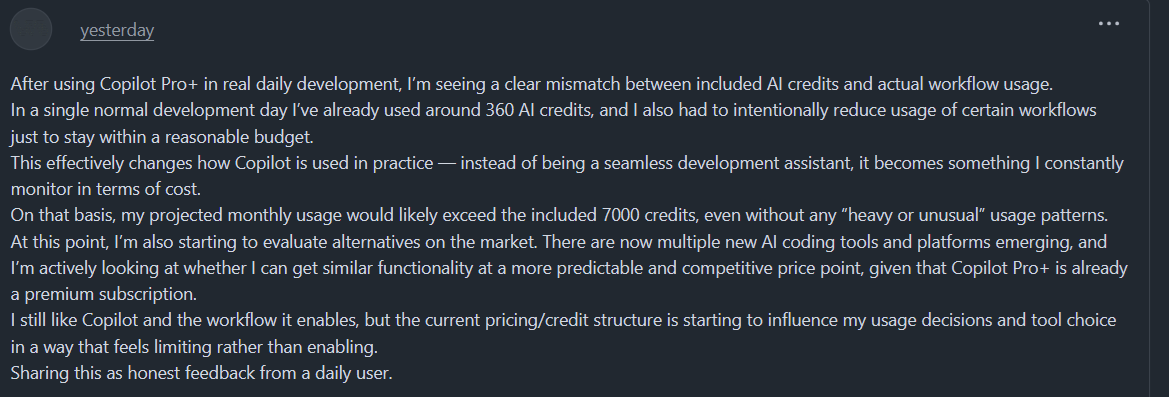
2 days ago, GitHub announced one of the most significant changes to Copilot since its launch: a shift from request-based pricing to usage-based billing.
While the discussion has largely focused on pricing, I think the more interesting question is about developer behavior. As AI tools become deeply integrated into our daily workflows, many of us are no longer just choosing a coding assistant. We're building an entire ecosystem around it. Prompt libraries, custom instructions, MCP servers, IDE integrations, CLI workflows, coding agents, team-wide adoption patterns, and even personal habits all create a level of investment that goes far beyond the monthly subscription fee.
This makes me wonder whether AI tooling is beginning to look more like cloud platforms than traditional developer tools. Once you're invested in an ecosystem, switching is no longer just about finding a cheaper alternative. It comes with migration costs, workflow disruption, retraining, and productivity trade-offs.
GitHub's move toward usage-based billing may be the start of a broader trend across the industry as providers look to align pricing with actual compute consumption. If that happens, pricing alone may become a less powerful differentiator than ecosystem strength and developer lock-in.
For developers and engineering leaders, this raises an interesting question:
If you're already deeply invested in an AI ecosystem (Copilot, Cursor, Claude Code, Codex, Gemini, etc.), how likely are you to switch to a competitor that offers better pricing? What would be enough to convince you to move?