AI Agents - CLI vs IDE
For the past year, most discussions around AI-assisted development have focused on a simple question:
Should engineers use AI inside the IDE or through CLI agents?
After spending time with both approaches, I've come to a different conclusion: this is no longer a tool comparison. It's a workflow comparison. AI inside the IDE (Cursor, Copilot, Windsurf, etc.) excels at tight feedback loops. It's great for debugging, implementing functions, reviewing code, and making small refactors. The engineer remains deeply involved in every decision, making it feel like pair programming with an extremely fast collaborator.
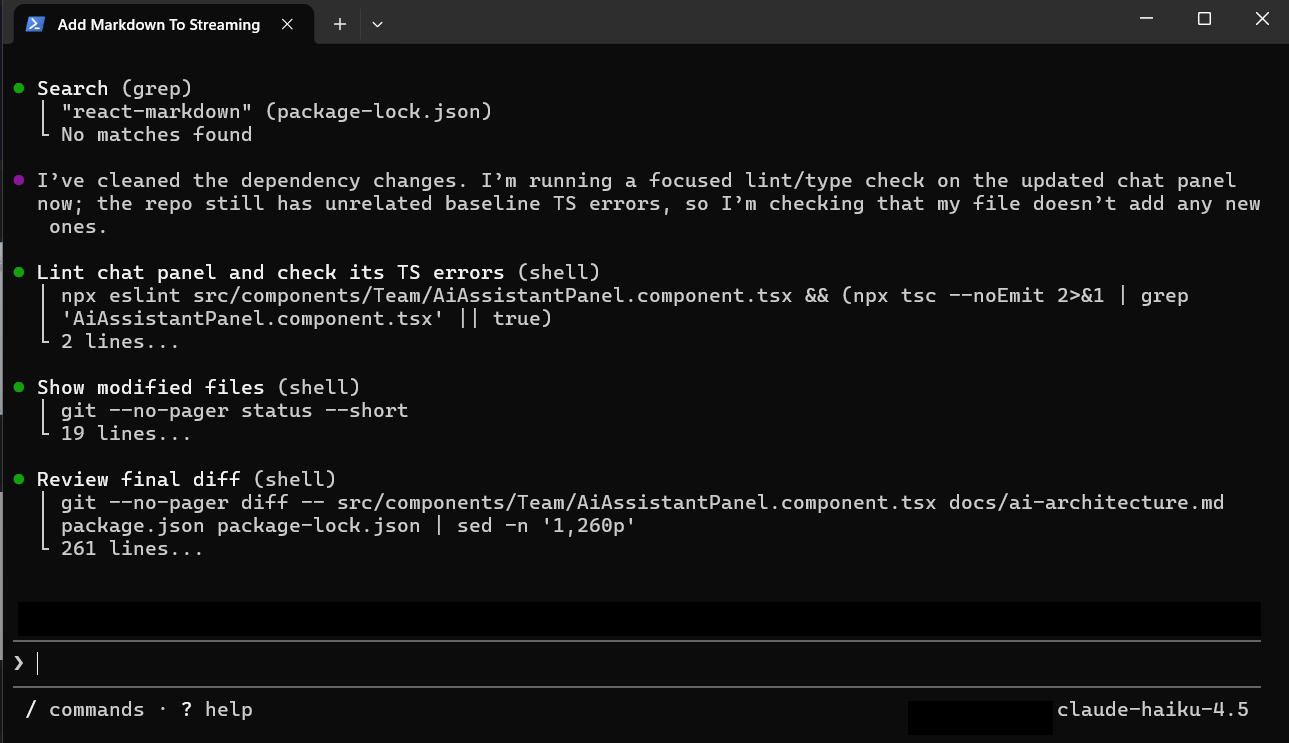
CLI agents (Claude Code, Codex CLI, Gemini CLI, etc.) optimize for something different: delegation. Instead of guiding every step, you can assign larger tasks such as framework migrations, test generation, repository-wide refactoring, or CI fixes, while the agent explores the codebase, modifies files, and runs validation steps autonomously.
What's interesting is that many experienced engineers aren't choosing one over the other. They're combining both. IDE for understanding, reviewing, debugging, and architectural decisions. CLI agents for execution, automation, large-scale changes, and repetitive work.
In this model, the IDE becomes the command center, while AI agents become the workforce.The biggest productivity gain may not be writing code faster. It may be reducing coordination overhead. The workflow shifts from:
Think → Code → Test → Fix → Repeat
to:
Think → Delegate → Review → Merge
As AI agents become more capable, I believe the role of software engineers will increasingly evolve from implementing every detail to orchestrating and validating systems that can implement them.
How are you currently using AI in your development workflow: primarily as a pair programmer inside your IDE, or as an autonomous agent through the terminal?